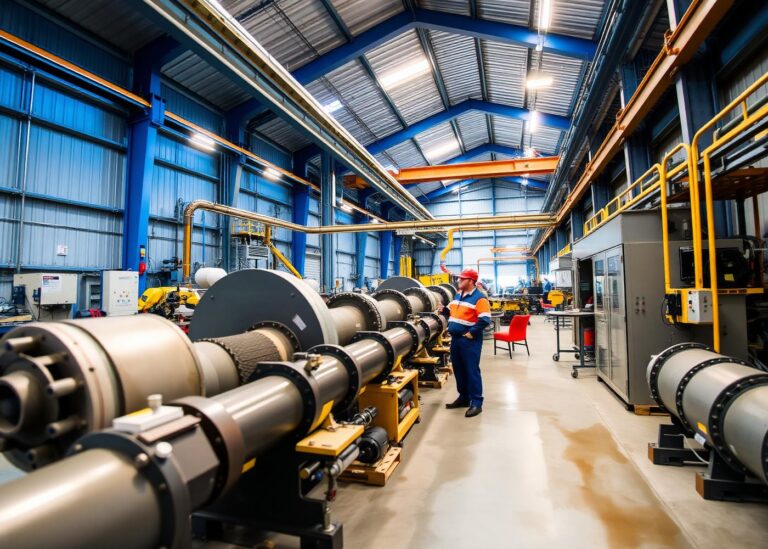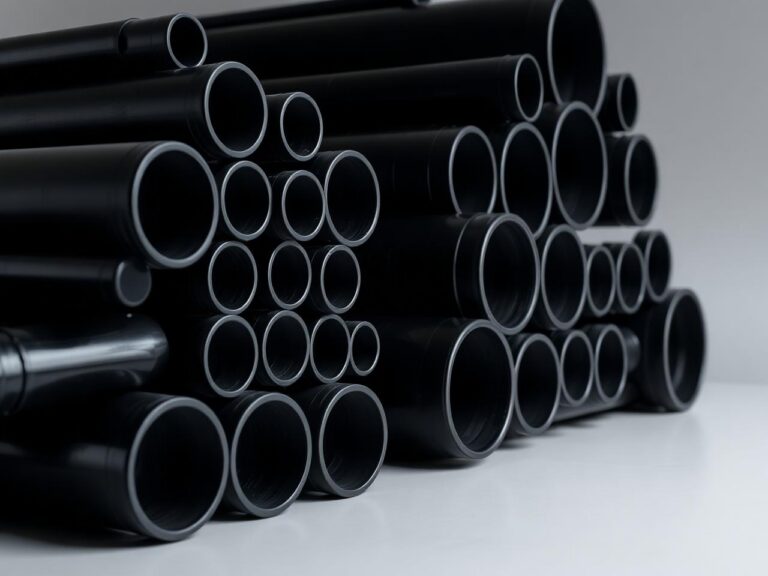
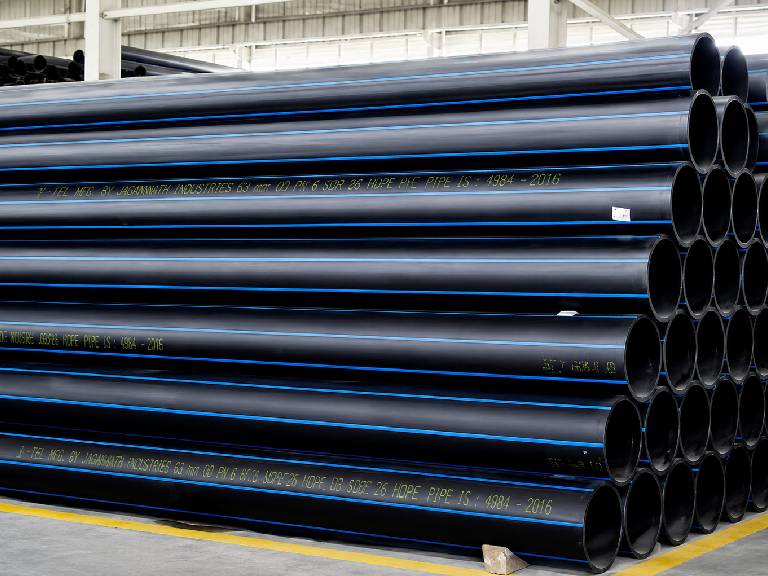
HDPE pipes have become an important part of modern water supply, irrigation, utility, and industrial infrastructure. Their combination of flexibility, strength, corrosion resistance, and practical installation characteristics makes them suitable for a wide range of piping requirements. As infrastructure projects become more demanding, choosing the right piping material is increasingly important for achieving dependable performance and reducing long-term maintenance requirements.
Jagannath Industries provides HDPE pipe solutions for applications where reliable fluid transportation, durability, and installation efficiency are essential. From water distribution networks to industrial utility systems, HDPE piping can provide a practical alternative to traditional piping materials when the product is correctly selected according to project requirements.
Understanding HDPE Pipes
HDPE stands for High Density Polyethylene, a thermoplastic material widely used for manufacturing pipes and other infrastructure products. HDPE pipes are engineered to provide a combination of flexibility and structural strength, allowing them to perform across different installation environments.
Unlike rigid piping materials that may be more vulnerable to cracking under certain ground movement conditions, HDPE pipes can accommodate a degree of movement because of their flexible nature. This characteristic can be particularly useful in underground installations where soil conditions and external forces need to be considered.
The smooth internal surface of HDPE piping also supports efficient fluid movement and can help reduce the accumulation of deposits under suitable operating conditions. These characteristics have contributed to the increasing use of HDPE pipes in water, irrigation, utility, and industrial applications.
HDPE Pipes for Water Supply Systems
A dependable water distribution network requires piping capable of handling continuous service while maintaining consistent performance. HDPE pipes are widely considered for potable and non-potable water infrastructure, subject to the applicable standards and project specifications.
They can be used in municipal distribution networks, residential developments, commercial projects, agricultural water systems, and various infrastructure applications. Their flexibility can make routing easier in projects where pipelines need to follow changing ground profiles or navigate around existing infrastructure.
For water supply projects, factors such as pipe diameter, pressure class, wall thickness, installation conditions, water quality requirements, and applicable standards should be evaluated before selecting the appropriate HDPE pipe.
HDPE Pipes for Irrigation Applications
Agricultural irrigation systems require dependable water transportation across varying distances and terrain. HDPE pipes can be used for irrigation mains, distribution lines, agricultural water networks, and other suitable applications.
Their relatively lightweight construction can make transportation and handling more convenient, particularly for projects involving long pipeline routes. Flexibility can also be beneficial when installing pipelines across uneven ground or around obstacles.
A properly designed HDPE irrigation system can support efficient water distribution while helping project owners manage maintenance requirements over the service life of the network.
Industrial Applications of HDPE Pipes
Industrial environments can place different demands on piping systems depending on the type of fluid, operating conditions, pressure, temperature, and surrounding environment. HDPE pipes are used in various industrial and utility applications where their material properties are suitable for the intended service.
Potential applications include industrial water transportation, process utility lines, cooling water systems, wastewater-related infrastructure, chemical handling applications where compatibility has been confirmed, and general utility networks.
Because industrial requirements vary significantly, pipe selection should be based on technical evaluation rather than a one-size-fits-all approach. Material compatibility, operating temperature, pressure, fluid characteristics, installation method, and relevant standards should be reviewed before specifying the pipe.
Why HDPE Pipes Are Preferred for Modern Projects
The growing use of HDPE piping is linked to several practical advantages. Project engineers and contractors often consider HDPE when they need a piping material that combines durability with installation flexibility.
1. Excellent Flexibility
HDPE pipes can bend to accommodate certain changes in alignment and ground conditions. This flexibility can simplify pipeline routing and may reduce the need for numerous fittings in suitable installations.
2. Corrosion Resistance
HDPE is naturally resistant to corrosion and does not rust like conventional metallic piping. This makes it useful in environments where moisture and corrosive conditions could affect metal pipes.
3. Lightweight Construction
Compared with many traditional pipe materials, HDPE pipes are relatively lightweight. This can simplify transportation, site handling, and positioning during installation when appropriate lifting and handling procedures are followed.
4. Smooth Internal Surface
The internal surface of HDPE pipes is generally smooth, supporting efficient fluid flow. This characteristic can be beneficial in systems designed for consistent water and fluid transportation.
5. Resistance to Environmental Conditions
HDPE pipes can perform effectively in many underground and outdoor environments when properly designed and installed. Their resistance to moisture and several common environmental factors makes them suitable for a broad range of infrastructure applications.
6. Long-Term Performance
When the pipe is correctly selected, installed, and operated within its intended parameters, HDPE piping can provide dependable long-term service. Proper installation and adherence to project specifications remain essential for achieving the expected performance.
HDPE Pipes for Underground Infrastructure
Underground pipelines are exposed to different challenges compared with above-ground systems. Soil movement, external loads, moisture, installation depth, and surrounding infrastructure can all influence pipe performance.
HDPE’s flexibility makes it a practical option for many underground applications. The pipe can accommodate controlled ground movement more effectively than some rigid materials, helping it suit infrastructure projects where flexibility is an important consideration.
However, underground installation should always follow an appropriate engineering design. Trench preparation, bedding, backfilling, joining methods, cover depth, and external loading should be considered to ensure the pipeline performs as intended.
HDPE Pipe Joining and Installation
The performance of an HDPE piping network depends not only on the quality of the pipe but also on how the system is installed and joined.
Depending on the application and pipe design, suitable joining methods may include butt fusion, electrofusion, mechanical connections, or other approved techniques. The appropriate method depends on pipe dimensions, project specifications, site conditions, and the requirements of the piping system.
Installation should be carried out by trained personnel using suitable equipment and procedures. Correct alignment, surface preparation, joining parameters, trench conditions, and inspection are important aspects of a successful HDPE pipe installation.
Selecting the Appropriate HDPE Pipe
Every project has different requirements, so selecting an HDPE pipe should involve more than choosing a commonly used size. Several factors should be evaluated before placing an order.
Pipe Diameter
The required diameter depends on flow requirements, pipeline length, pressure conditions, and system design. Correct sizing helps support efficient operation.
Pressure Requirements
The pipe should be selected according to the expected operating pressure and applicable design conditions. Using an unsuitable pressure rating can affect system reliability.
Wall Thickness
Wall thickness is related to the pipe’s pressure capability and dimensional requirements. It should be selected according to project specifications and relevant standards.
Installation Environment
Whether the pipe will be installed underground, above ground, in an industrial facility, or across agricultural land can influence product selection and installation requirements.
Fluid Characteristics
The material being transported should be considered, particularly in industrial applications. Chemical compatibility and operating temperature should be reviewed where relevant.
Applicable Standards
Quality and dimensional requirements should be checked against the standards and specifications applicable to the project, industry, and intended use.
HDPE Pipes and Maintenance Considerations
One of the reasons HDPE pipes are considered for infrastructure projects is their potential to reduce maintenance requirements under suitable operating conditions. Their corrosion resistance and smooth internal surface can provide advantages in applications where traditional materials may require greater attention.
Nevertheless, no piping system is completely maintenance-free. Regular inspection of accessible components, valves, joints, connection points, and exposed sections can help identify potential issues before they become major problems.
For underground systems, maintenance planning should also account for access points, isolation arrangements, records of pipeline routes, and other system components.
Applications Across Different Industries
The versatility of HDPE allows it to serve many infrastructure requirements. Common application areas include:
- Municipal water supply networks
- Residential and commercial water distribution
- Agricultural irrigation systems
- Industrial water lines
- Utility infrastructure
- Wastewater-related applications
- Underground fluid transportation
- Infrastructure development projects
- Construction and site utility systems
- Selected chemical and industrial applications based on material compatibility
The suitability of HDPE depends on the specific operating environment, so technical requirements should always be evaluated before use.
Why Manufacturer Selection Matters
Choosing the right manufacturer is an important part of any piping project. Product consistency, dimensional accuracy, material quality, technical specifications, and manufacturing practices can influence the overall reliability of a pipeline system.
A professional manufacturer should be able to provide clear product information and help customers understand the available pipe specifications for their intended application. This is particularly important for large infrastructure and industrial projects where incorrect product selection can increase installation costs and create future operational challenges.
Jagannath Industries focuses on providing HDPE pipe solutions for water supply, irrigation, industrial, and infrastructure requirements. The company supports applications where dependable piping performance and practical product selection are important considerations.
HDPE Pipes as a Long-Term Infrastructure Solution
Modern infrastructure requires piping systems that can balance performance, durability, installation practicality, and project economics. HDPE pipes offer a combination of properties that makes them suitable for many water, irrigation, utility, and industrial applications.
Their flexibility can support efficient routing, while corrosion resistance can be valuable in wet and underground environments. Lightweight construction can simplify handling, and a smooth internal surface can support efficient fluid transportation.
The overall performance of an HDPE pipeline, however, depends on more than the pipe material itself. Correct engineering, product selection, joining procedures, installation practices, operating conditions, and regular system management all contribute to long-term results.
Conclusion
HDPE pipes are a practical choice for many modern water supply, irrigation, industrial, and infrastructure projects. Their flexibility, corrosion resistance, lightweight construction, smooth internal surface, and potential for long-term service make them suitable for a wide range of applications.
For project owners, contractors, engineers, and infrastructure developers, selecting the right HDPE pipe requires careful consideration of application requirements, pressure conditions, dimensions, installation environment, fluid characteristics, and applicable standards.
Jagannath Industries provides HDPE pipe solutions designed for diverse piping requirements across water supply, irrigation, industrial, and infrastructure applications. With appropriate product selection and professional installation, HDPE piping can become a dependable part of a modern and efficient infrastructure network.